PRODUCT DESIGN / UX STRATEGY / DELIVERY
Renewal Report Maintenance
Transforming a support-dependent report process into a clearer self-service workflow for uploading assets, validating inputs, and generating recurring advisor documents.
Making recurring document production understandable and self-service
Business teams coordinated spreadsheets, static marketing pages, and multiple report cycles to produce renewal and claims-experience documents. The process depended heavily on technical support and offered limited visibility into required inputs, document state, and recovery when regeneration was needed.
Goals- Create a self-service workflow for preparing and uploading report assets
- Support generation, regeneration, and repeat yearly cycles
- Reduce routine dependency on technical teams
- Make required inputs, document state, and next actions explicit
- Task flow
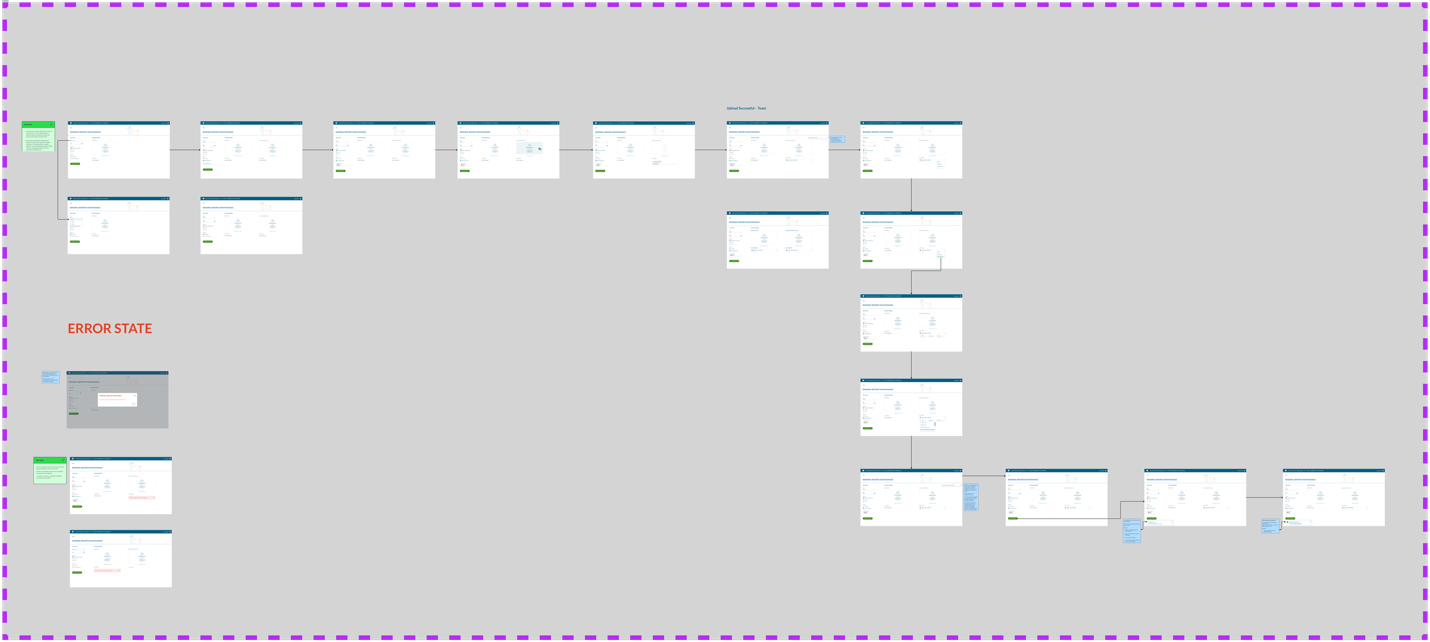
- State wireframes
- High-fidelity mockups
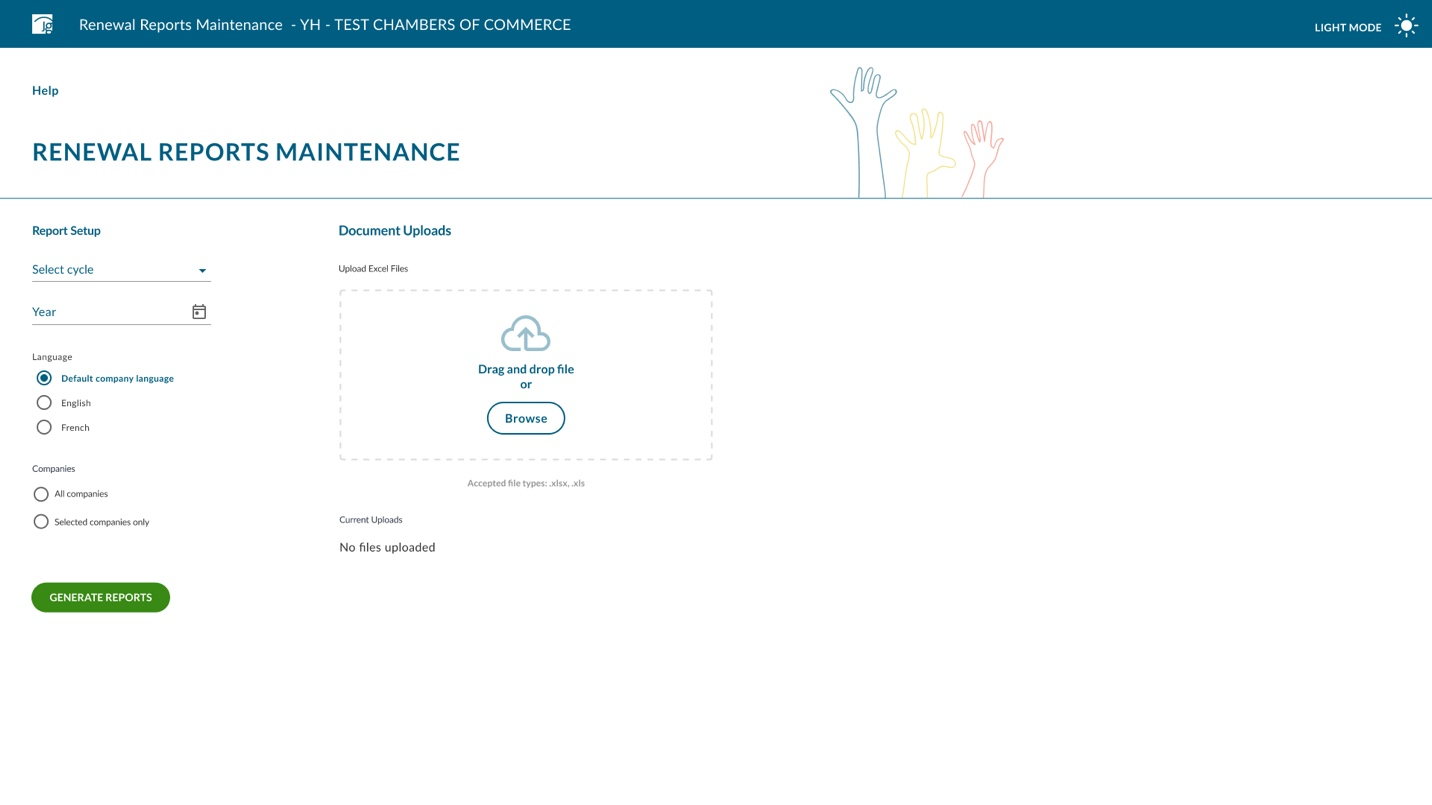
- Final interface
Multiple report types and cross-team dependencies
Reporting, marketing, business, and technical teams had to coordinate assets and readiness for recurring document production. Because the workflow happened periodically, returning users needed an interface that made context and prerequisites easy to re-establish.
- Multiple report types, release cycles, and asset combinations
- Unclear ownership and readiness across teams
- Routine generation and regeneration dependent on technical support
- Need for explicit upload, validation, generation, and error states
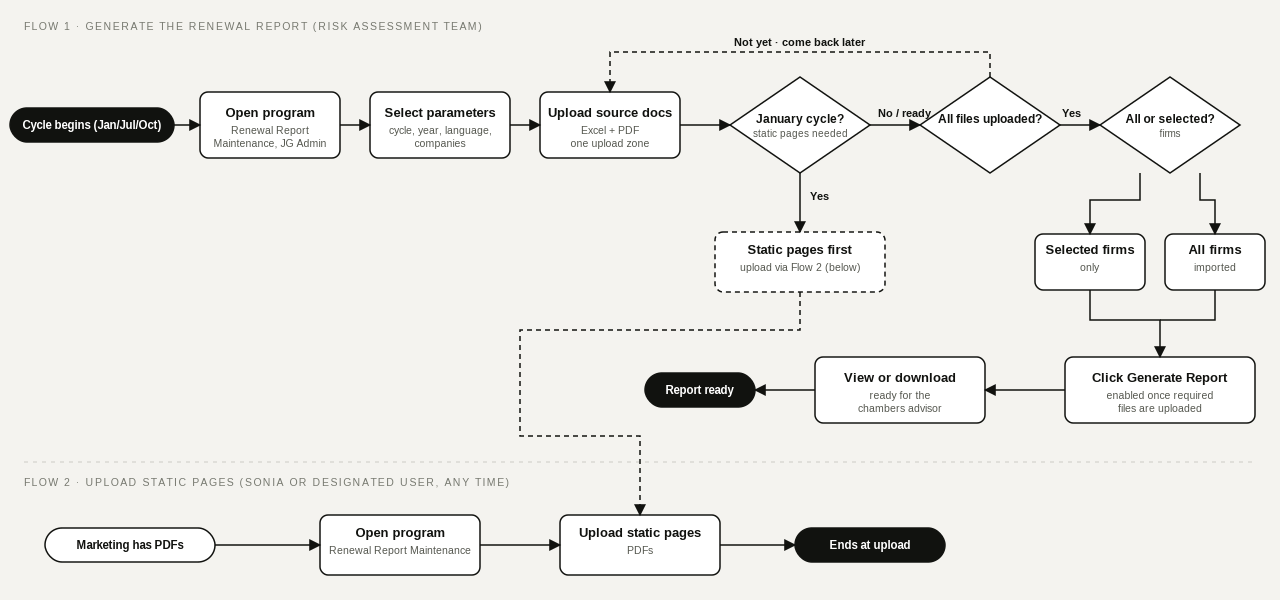
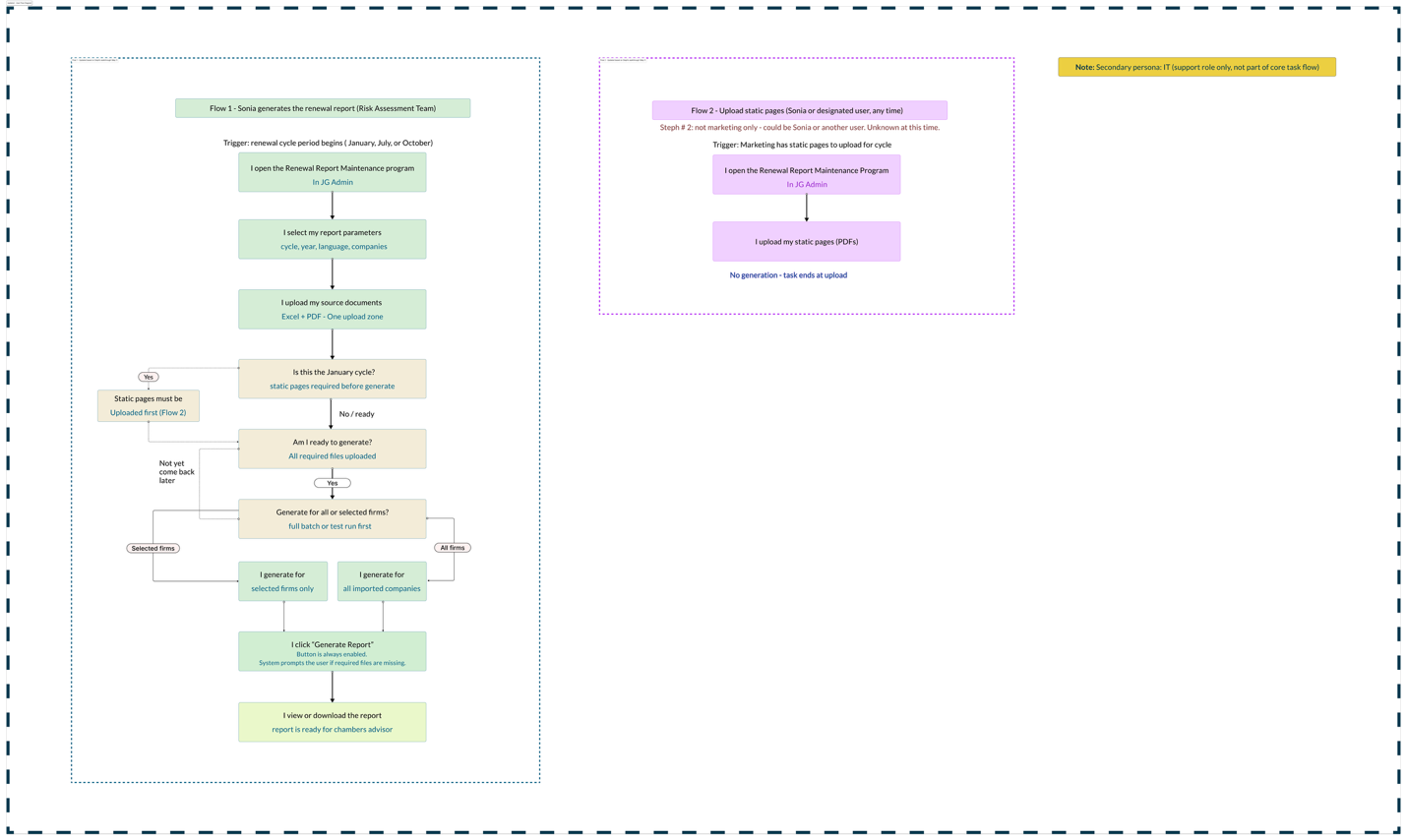
Map the service and task flow across teams
I mapped roles, prerequisites, user actions, system responses, exceptions, and decision points before committing to screen-level solutions. The work considered reporting teams preparing data, marketing partners supplying static pages, and business users generating advisor-facing documents.
Recognition over recall for an infrequent workflow
Because users returned to the process at specific points in the year, the interface needed to make report context, required assets, readiness, and recovery actions visible. Users should not have to rely on memory or specialist support to complete routine work.
- Make prerequisites and asset readiness explicit
- Show document context and generation status
- Provide predictable regeneration and recovery behaviour
- Clarify cross-team ownership and handoffs
Focus the MVP on the essential self-service loop
The MVP focused on asset preparation and upload through generation and regeneration. This core loop exposed the most important system states and created a foundation for later document-management capabilities.
I prioritized recognition over recall through a clear task sequence, visible document context, explicit prerequisites, and timely system feedback.
From wireframes to a high-fidelity workflow
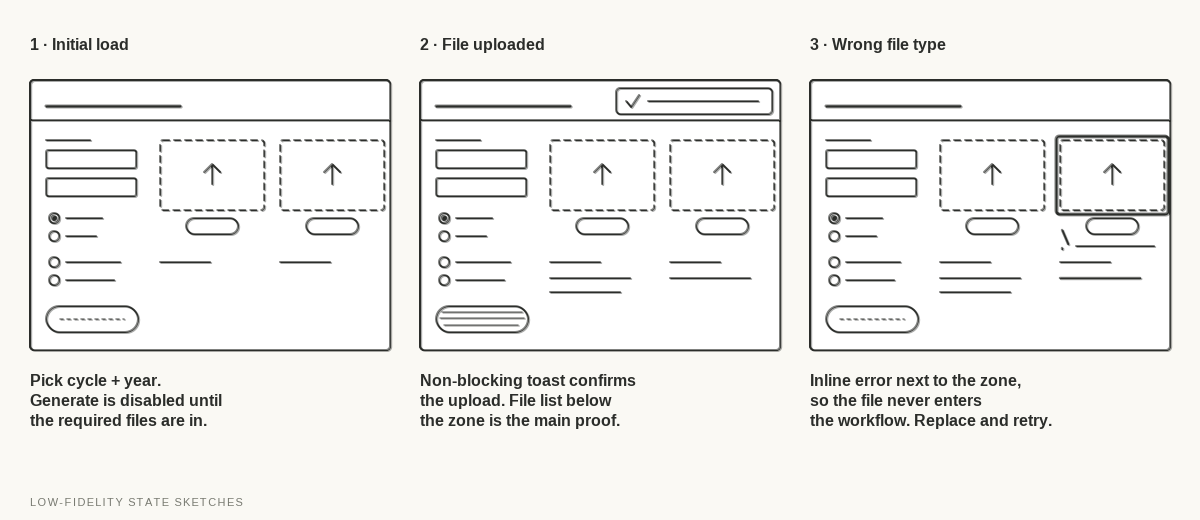
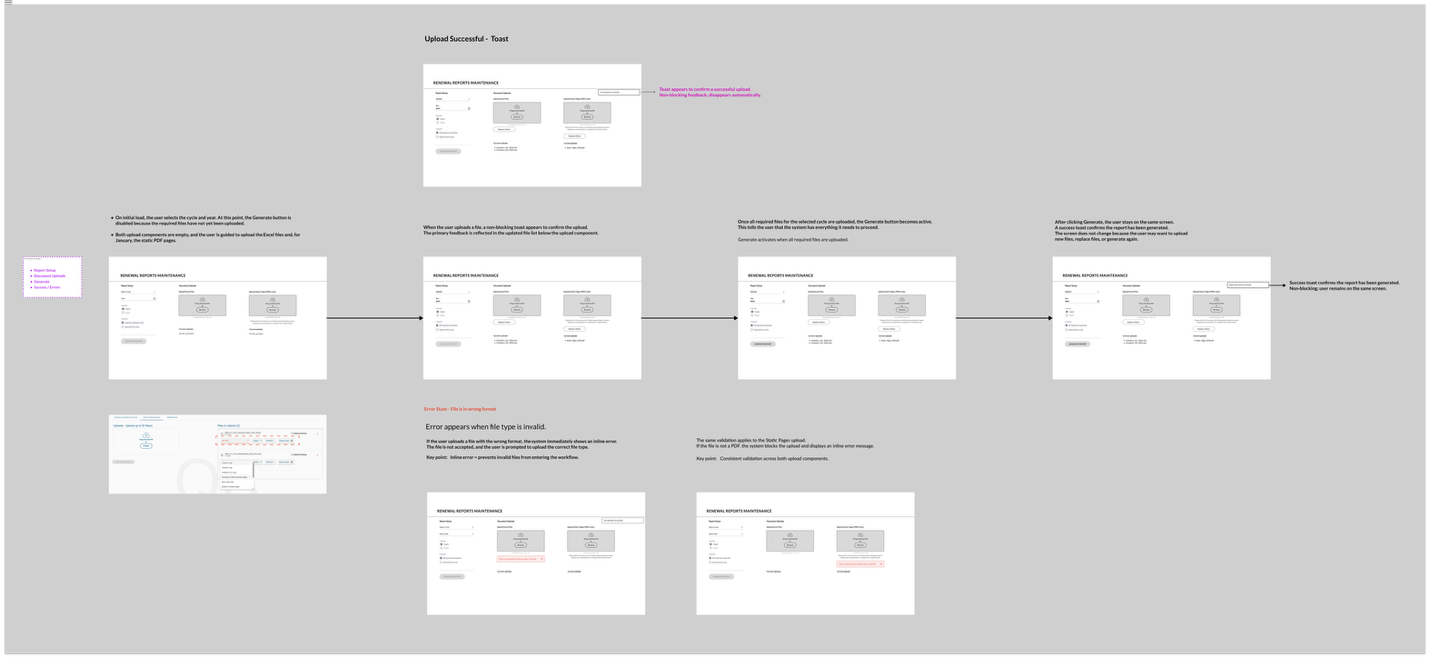
I explored content hierarchy, task sequence, system feedback, and recovery actions before introducing visual detail. High-fidelity flows connected key screens and states so stakeholders could review behaviour, edge cases, and handoff expectations in context.
A clearer operating model for recurring document production
The proposed experience made prerequisites, ownership, document state, and next actions visible in one workflow. It reduced reliance on procedural memory and established a clearer self-service model for recurring report production across teams.
Measurement note: Post-launch analytics were not yet available when I transitioned from the project. Success should be evaluated through:
- Support requests and escalations related to generation, regeneration, or missing inputs
- Cycle time from asset readiness to a successfully generated document package
- Self-service completion rate, including recovery from validation or generation errors
Design for the user who returns months later
An infrequent workflow needs stronger contextual cues than a tool used every day. Making prerequisites, ownership, status, and next actions visible helps users re-establish context and complete the process without depending on memory or technical support.